
Category: Uncategorized

Three wax legs showing treatment of ulcers caused by syphilis. Would these gruesome wax models showing the effects of syphilis make you think twice about having sex? That was their intention when they were made in the 1910s, and collected by painter Leonce Schiffmann for a touring anatomy exhibition in the 1920s. Doctors and public health officials claimed that the spread of this sexually transmitted infection would only be halted when the public knew about its consequences and means of prevention.
Education campaigns tended to exploit society’s disgust of this unsightly infection. What is your reaction to the sores and ulcers seen here on the mouth and legs? Historians have argued that this approach did not solve the problem, but added to the fear of the disease, and the stigma and discrimination towards its sufferers.
‘Before and after’ waxes also aimed to show the value of prompt treatment with ‘magic bullet’ Salvarsan, the 606th arsenic compound tested by Paul Ehrlich and his team. Look for the models with a white label – they indicate treatment with (preparation) 606. The injections were painful though, and a long course was often needed.
Former carnival ‘freak’ show owners Lily Binda and William Bonardo inherited the collection a few decades later. The waxes took on yet another role – to cause sensation. The life-size models, some with genuine human hair, were toured around European fairgrounds. But whether exhibited for education or leisure, their convincing depiction of syphilis has certainly made them a talking point. The Wellcome Collection


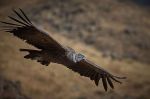

Andean condor (Vultur gryphus)
The Andean condor is a South American bird in the New World vulture family Cathartidae and is the only member of the genus Vultur. Found in the Andes
mountains and adjacent Pacific coasts of western South America, the
Andean condor is the largest flying bird in the world by combined
measurement of weight and wingspan. It has a maximum wingspan of 3.3 m. Unlike most birds of prey, the male is larger than the female. The condor is primarily a scavenger, feeding on carrion. It prefers large carcasses, such as those of deer or cattle.t is one of the world’s longest-living birds, with a lifespan of over 70 years in some cases.photo credits: Eric Kilby, Pedro Szekely, Michael Gäbler

A drawer full of Christmas beetles [genus Anoplognathus], members of the scarab family so named for their tendency to appear around Christmas time in their native Australia. Image by Cameron Richardson.


The magnificent bull Asian Elephant watches over the crowd at the American Museum of Natural History. This mount never fails to impress me, even after years of visiting the museum.

 thefancywalrus